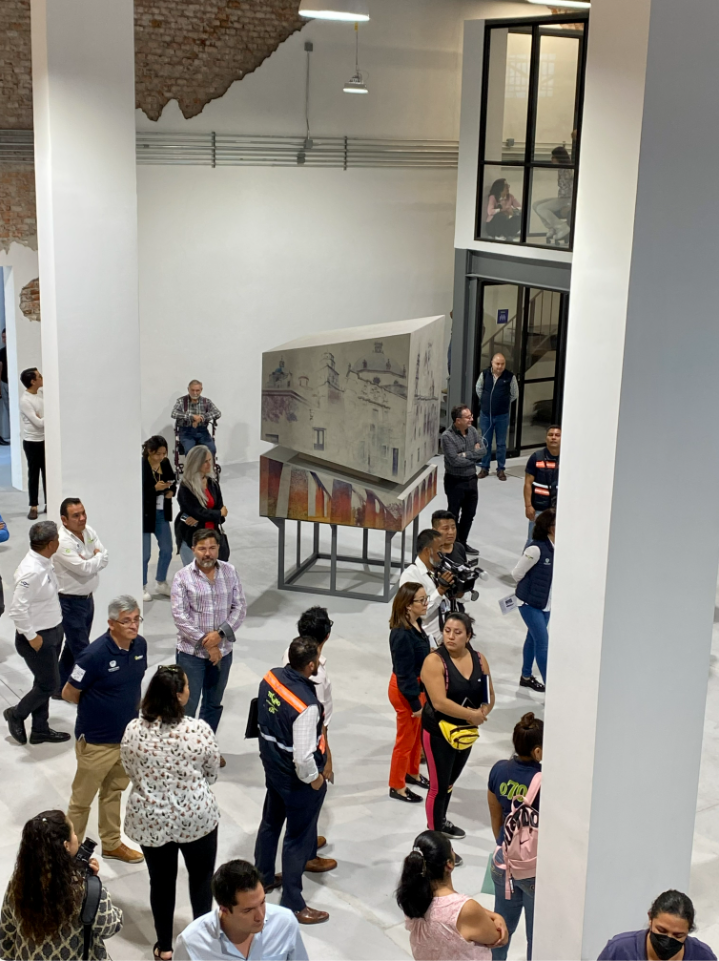
Ñuhyadi (Poniente)

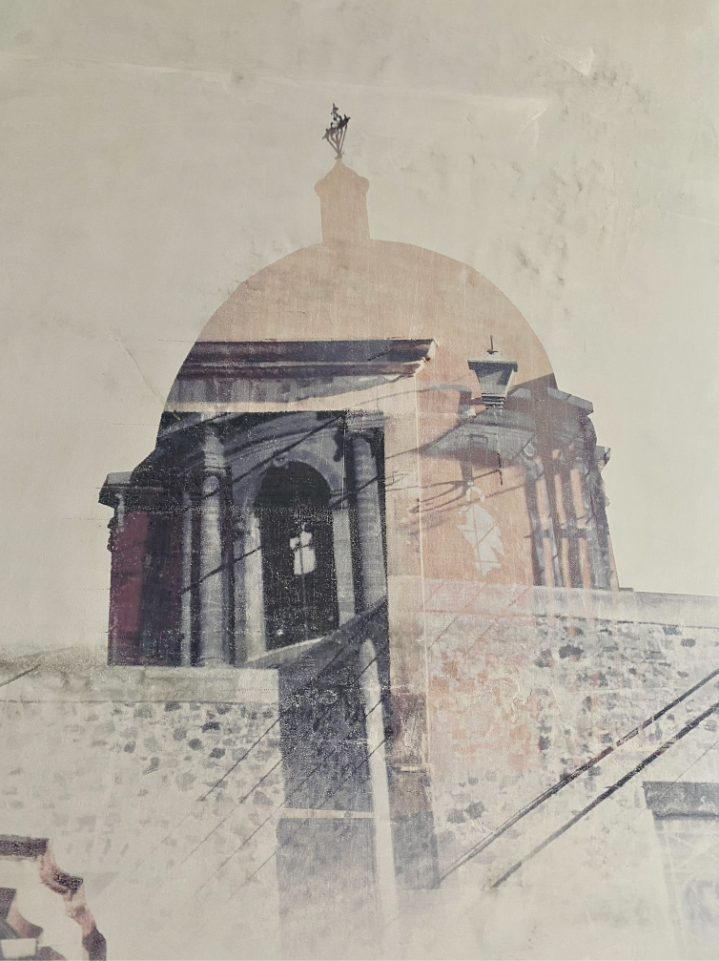
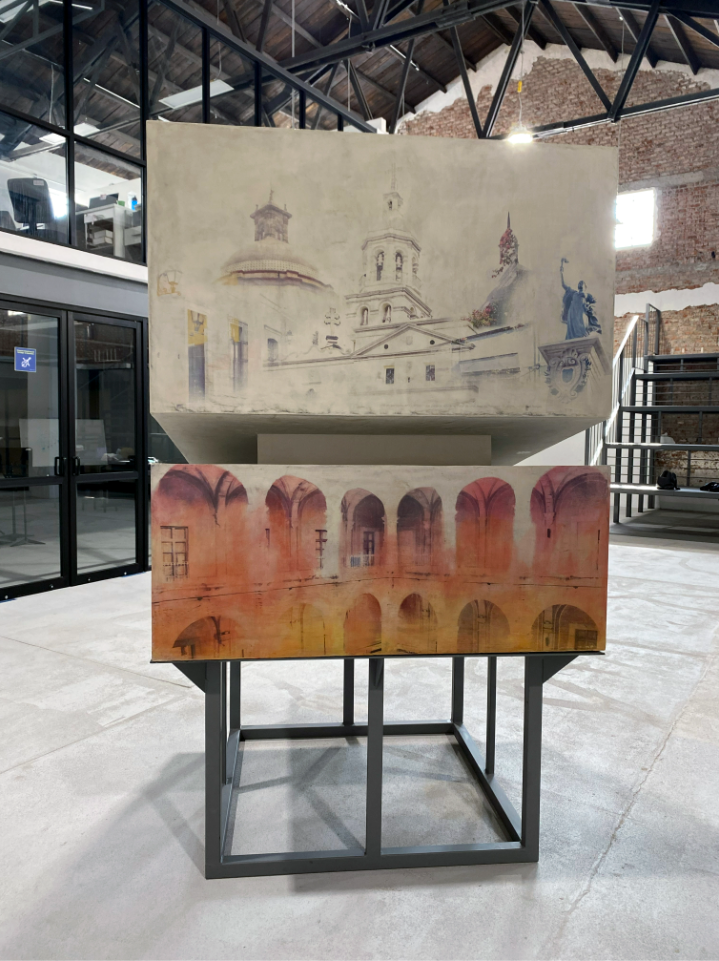
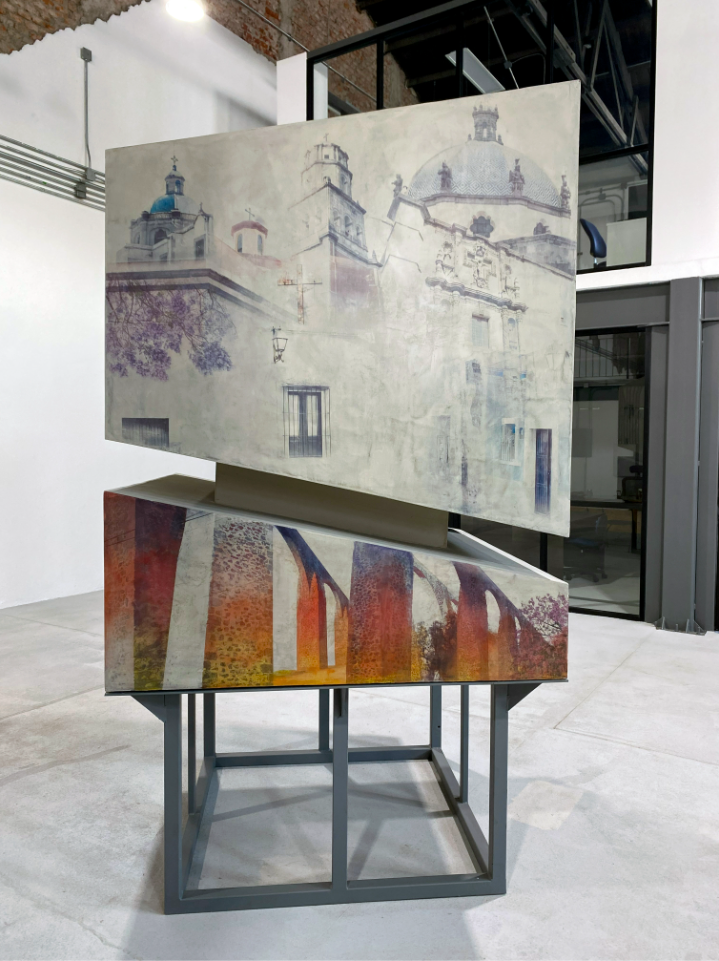
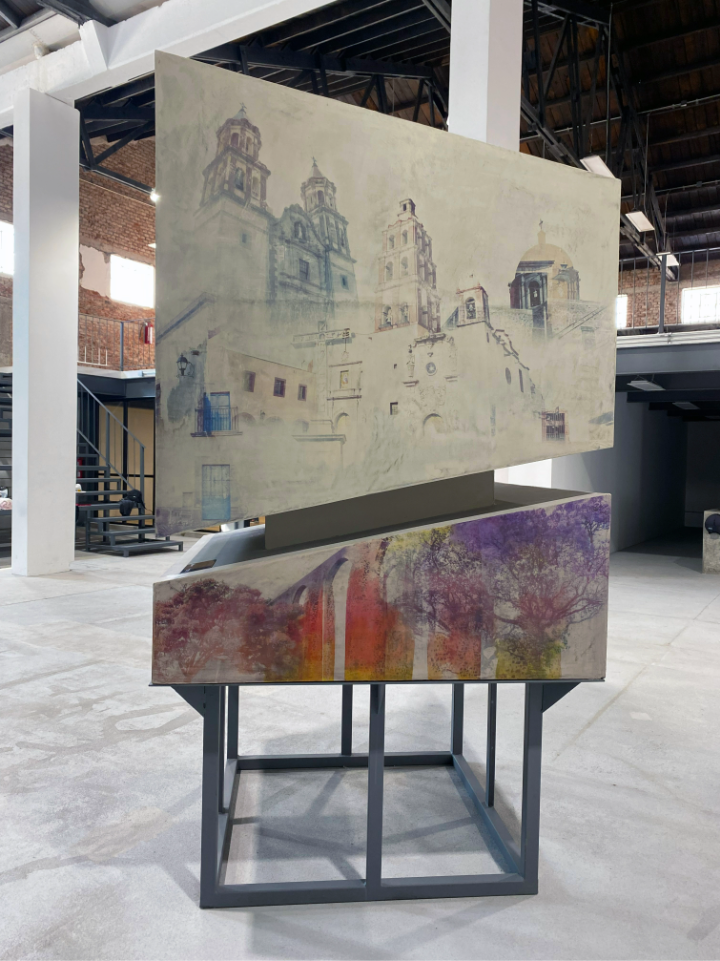
Esta pieza me la encargó la Secretaría de Cultura del Municipio de Querétaro. Querían una obra para el aniversario de la ciudad que hablase de Querétaro con mi lenguaje. Si algo he hecho en los casi 8 años que llevo viviendo en esta ciudad ha sido fotografiarla. De una manera performativa, casi metódica he ido registrando cada rincón de ella, de tal forma que al final, esta ciudad en la que ahora resido ya forma parte de mi y viceversa.

Dice Antonio López, gran pintor de ciudad al que tanto admiro en una de sus últimas entrevistas televisivas, que, “una ciudad te sugiere la vida, la muerte, te sugiere todo; no hay nada que no esté en su pared”.

Si algo caracteriza a Querétaro y que la hace diferente y única son sus atardeceres tan distintos y mágicos. Citando palabras de Borges a su paso por Querétaro: “vi un poniente en Querétaro que parecía reflejar el color de una rosa en Bengala”. De ahí el nombre de la pieza, añadiendo además un guiño al otomí, en Hñähñú, “ñuhyadi”, “lugar donde se pone el sol”.

Ñuhyadi (West)

This piece was commissioned by the Department of Culture of the Municipality of Querétaro. They wanted a work for the anniversary of the city that spoke of Querétaro with my language. If I have done anything in the almost 8 years that I have been living in this city, it has been to photograph it. In a performative, almost methodical way, I have been registering every corner of it, in such a way that in the end, this city in which I now reside is already part of me. Antonio López, a great city painter whom I admire so much in one of his latest television interviews, says that “a city suggests life, death, everything; there is nothing that is not on your wall”
If something characterizes Querétaro and that makes it different and unique, it is its so different and magical sunsets. Quoting the words of Borges on his way through Querétaro: “I saw a west in Querétaro that seemed to reflect the color of a rose in Bengal.” Hence the name of the piece, also adding a nod to the Otomí, in Hñähñú, “ñuhyadi”, “place where the sun sets”.